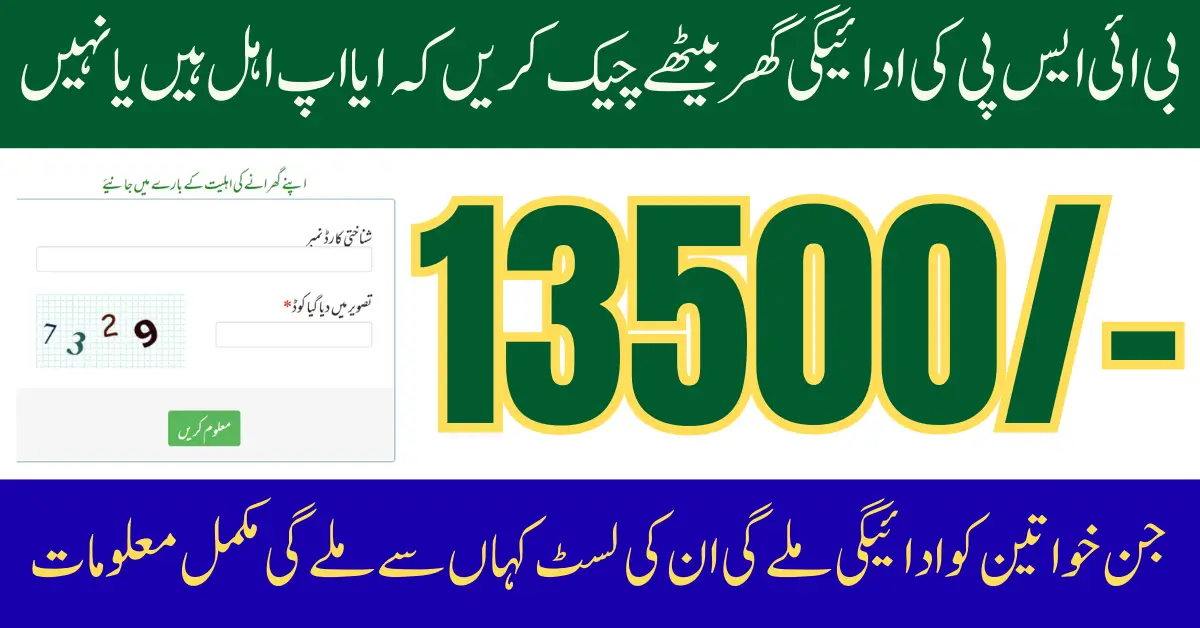
BISP Survey 2025 Beneficiary Payment
BISP Survey 2025 Beneficiary Payment has been Pakistan’s largest social welfare initiative since its launch in 2008. For years, it has provided financial assistance to millions of low-income families, with women being the primary beneficiaries.
In 2025, the government introduced important reforms through the BISP Survey 2025, making the system more transparent, efficient, and fair for registered women. With these reforms, beneficiaries are now entitled to receive Rs. 13,500 every quarter, provided they complete the new survey and meet the eligibility requirements.
You Can Also Read: Punjab Solar Panel Scheme Results 2025 Balloting Winners
Purpose of the BISP Survey 2025
The BISP Survey 2025 was launched to update the National Socio-Economic Registry (NSER) and ensure that only the most deserving families continue to receive support. Many beneficiaries had been enrolled for years without proper verification, which created loopholes and allowed ineligible households to benefit unfairly. To address this, the dynamic survey was made compulsory for all existing beneficiaries, as well as for new applicants who wanted to join the program.
Through this initiative, the government has taken steps to:
- Verify the authenticity of existing beneficiaries.
- Identify new women applicants who meet the updated criteria.
- Exclude households with higher income or assets.
- Protect resources for widows, disabled women, and senior citizens.
By making the process digital and transparent, the government aims to build greater trust in the program and ensure women from the poorest households are prioritized.
You Can Also Read: CM Punjab Kisan Card 2025 August Update Interest-Free Loans
Documents Required for Women Beneficiaries
To complete the survey successfully, registered women must provide accurate and updated documentation. Without proper documents, their applications cannot be processed, and they risk disqualification from the program.
The key documents required are:
- Original CNIC of the household head – mandatory for biometric verification.
- B-Forms of children – required to register dependents.
- Active mobile number – for receiving SMS alerts and verification updates.
- Latest electricity bill – to verify household details and living conditions.
These documents help the system assess each household’s financial condition more effectively, ensuring that only truly deserving women remain enrolled.
You Can Also Read: CM Punjab Honhaar Scholarship Registration Process
Eligibility Criteria for Registered Women
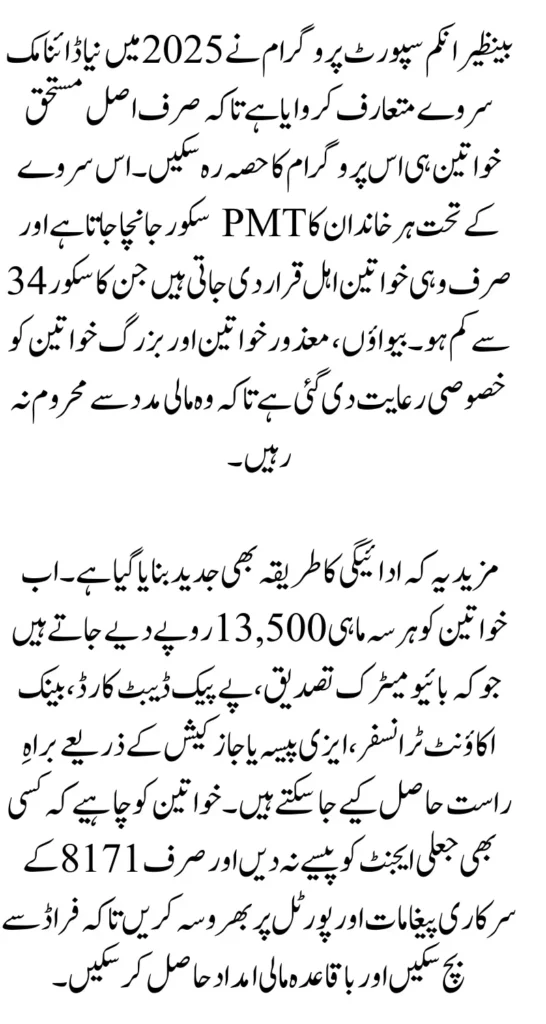
Eligibility is now determined through the Proxy Means Test (PMT) score, which is calculated based on income, assets, and overall household conditions. Women who meet the updated score requirements remain eligible for quarterly assistance, while those above the threshold are excluded.
- PMT Score Requirement: Below 34.
- Disqualified Families: Women with higher PMT scores or false information.
- Exceptions Still Eligible:
- Widows
- Disabled women
- Senior women with no independent income
This system ensures that government funds reach women who are truly struggling to make ends meet, rather than those who already have stable financial conditions.
Latest Beneficiary Payment Update 2025
One of the most important updates for registered women is the revised quarterly installment of Rs. 13,500. Payments are released only to those who have successfully completed the survey and passed eligibility checks. The next round of payments is expected in September 2025, although the exact release date may vary depending on location and banking schedules.
This increase in financial assistance is aimed at helping women cover essential household expenses, including food, healthcare, and education for their children. It reflects the government’s commitment to strengthening the financial security of vulnerable families.
Updated Payment Methods for Women
The government has also modernized the payment system to make the process easier, safer, and faster for registered women. Instead of relying on long queues at payment camps, beneficiaries can now access funds through multiple digital channels.
The new payment system includes:
- Biometric Verification: Payments released only after thumbprint verification at ATMs, banks, or POS terminals.
- PayPak Debit Cards: Issued to women facing fingerprint issues, allowing ATM withdrawals and purchases.
- Instant Digital Transfers: Payments directly deposited into accounts via Raast and IBFT.
- Mobile Wallets: Easypaisa and JazzCash accounts linked to CNICs can also receive funds.
These reforms have reduced waiting times, eliminated unnecessary middlemen, and improved the security of payments for registered women.
How to Check BISP Payment Status in 2025
Registered women can easily check their eligibility and payment details through different official methods. The process is simple and designed to be accessible for everyone.
- 8171 SMS Service: Send your CNIC number (without dashes) to 8171 and receive instant eligibility information.
- BISP Online Portal: Visit the official 8171 portal, enter your CNIC with captcha code, and view payment history and upcoming installment details.
- Tehsil Office Visit: Carry your CNIC to the nearest BISP Tehsil Office for manual verification and assistance.
These options ensure that women can track their payments without relying on agents or third parties.
Fraud Protection for Women Beneficiaries
As the program becomes more digital, there has also been an increase in fraud attempts targeting vulnerable women. It is essential for beneficiaries to remain vigilant and protect their personal data.
Women are advised to:
- Never pay money to any agent for registration or payment processing.
- Avoid sharing CNIC numbers or documents with unauthorized persons.
- Trust only the official 8171 SMS service and the BISP 8171 portal.
- Keep CNICs and PayPak debit cards safe to prevent misuse.
By following these precautions, women can ensure their benefits remain secure and uninterrupted.
Impact of the 2025 Reforms on Women Beneficiaries
The reforms of 2025 have brought significant improvements to the BISP system, especially for registered women. The updated survey ensures that only deserving families stay enrolled, while the new digital payment methods make the process faster and more reliable.
Before the Reforms:
- Long queues at payment centers caused delays.
- Many ineligible beneficiaries remained on record.
- Payments were not always secure or timely.
After the Reforms:
- NSER records updated to reflect current household data.
- Faster digital transfers through ATMs, Raast, and mobile wallets.
- Priority given to widows, disabled women, and senior citizens.
- Increased fairness, efficiency, and accountability.
Final Thoughts
The BISP Survey 2025 marks a major step in strengthening Pakistan’s social safety net for women. With stricter eligibility checks, updated records, and secure digital payment systems, the program is now more transparent and effective than ever. Registered women must complete the survey on time, provide accurate documents, and use only official channels to check their status. By doing so, they can ensure uninterrupted quarterly payments of Rs. 13,500, helping them manage their households with dignity and financial stability.